Destination guide
Cluj-Napoca: practical information for your visit
A lively university and technology city in Transylvania, compact enough to get around easily. Here is what is useful to know if your treatment takes you there.
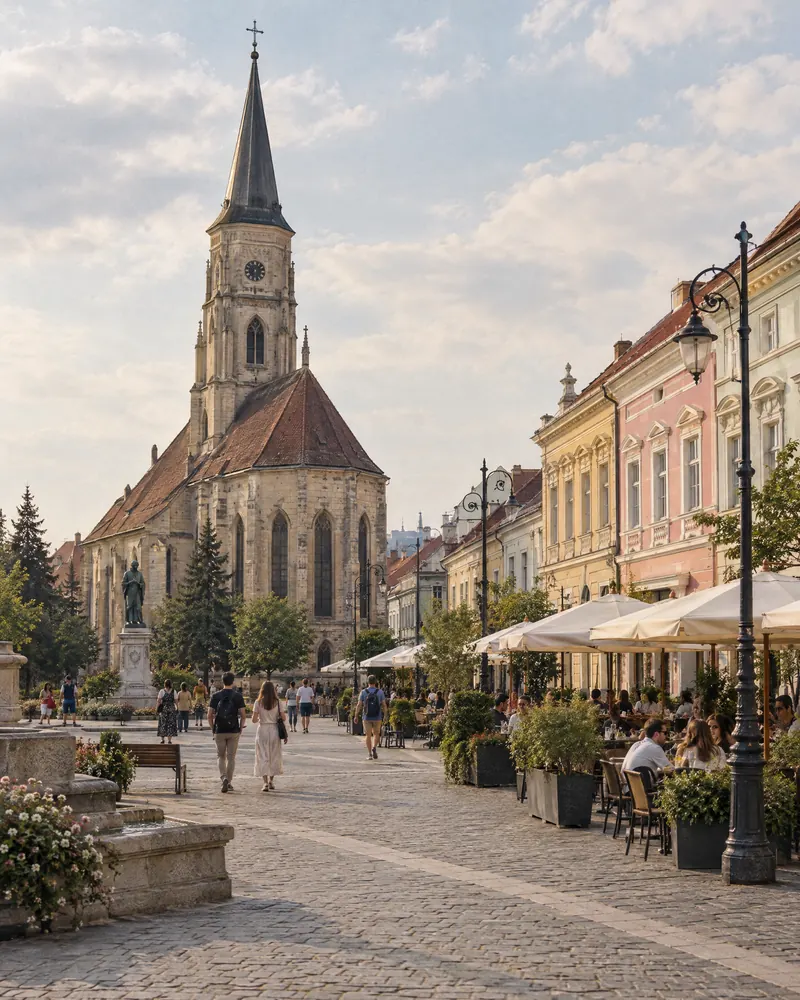
About Cluj-Napoca
Cluj-Napoca is one of Romania's largest cities and the informal capital of the historic region of Transylvania, in the north-west of the country. It is known for its universities, including a long-established medical and pharmacy university, and for a growing technology sector, which gives it a young, international feel.
The historic centre is compact and walkable, with cafés, squares and green spaces such as the Central Park. For patients, that makes it straightforward to stay somewhere central and reach appointments without long journeys.
Practical essentials
- Currency
- Romanian leu (RON). Many clinics quote treatment in euros; card payments are widely accepted, but check how your bank handles foreign transactions.
- Language
- Romanian. English is commonly spoken among younger people and many medical staff, though not universally; confirm in advance that your clinician and coordinator speak English.
- Plugs and voltage
- Type F (Schuko) sockets, 230V. UK travellers will need an adapter.
- Time zone
- Eastern European Time: UTC+2 in winter, UTC+3 in summer (two hours ahead of the UK and Ireland).
- Emergency number
- 112 for police, ambulance and fire.
- EU membership
- Romania has been a member of the European Union since 2007.
Verified clinics in Cluj-Napoca
No partner clinics in Cluj-Napoca have completed verification yet. Your coordinator can tell you when that changes.
Arriving at CLJ
Cluj Avram Iancu International Airport
- Located roughly 8–10 km east of the city centre.
- The journey into the centre by car typically takes around 15–30 minutes, depending on traffic.
- Public buses connect the airport with the city; check current routes and timetables.
- Ride-hailing apps and taxis are available at the airport.
Routes and schedules from the UK and Ireland change regularly, and some only operate seasonally. Please check current schedules with airlines and airports before planning, and allow flexibility in case your treatment plan changes.
Getting around
- The city centre is compact, and many places are within walking distance when you feel well.
- Ride-hailing apps and licensed taxis are widely available and convenient on treatment days.
- Buses, trolleybuses and trams cover the city and can be paid for by card or app.
- Some streets in the old town are cobbled or hilly, which is worth bearing in mind if mobility is a concern.
Where to stay
- Look for accommodation within a short ride or walk of your clinic.
- Ask for a quiet room away from busy streets or nightlife, particularly in the old town.
- Check for a lift and step-free access if needed.
- An apartment with a kitchen can make preparing soft food easier during longer stays.
- Choose flexible booking terms in case your appointments move.
Questions about Cluj-Napoca
Last updated 25 October 2026
How far is the airport from the city?
Avram Iancu (CLJ) is roughly 8–10 km east of the centre, typically around 15–30 minutes by car.
Is Cluj-Napoca a good place to recover?
Its compact centre and green spaces make it relatively easy to rest between appointments. As with any city, choosing quiet accommodation helps.
Will I need a car?
Usually not. Ride-hailing, taxis and public transport cover most needs, and driving is not advisable after sedation.
Do I need a visa to visit Romania from the UK or Ireland?
Entry requirements can change. Check the current guidance on GOV.UK (for British citizens) or from the Department of Foreign Affairs (for Irish citizens) before you travel, and make sure your passport or ID meets the requirements.
Is it safe to travel alone for treatment?
Many people do, but after surgery or sedation you may not feel up to managing alone. Consider bringing a companion, especially for longer or surgical visits, and ask the clinic what support they provide.
Treatment guides
Other destinations