Skip to content

Destination guide

Bucharest: practical information for your visit

Romania's capital and largest city, with a busy international airport and a wide choice of accommodation. Here is what is useful to know if your treatment takes you there.
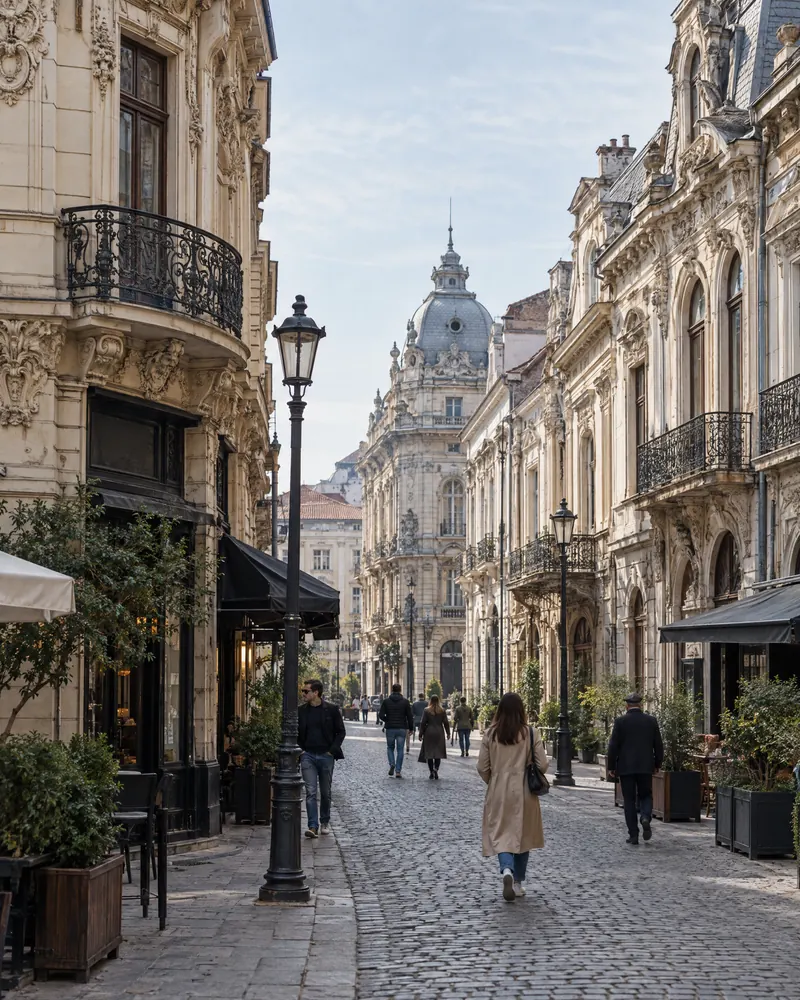
Bucharest street scene, natural light
Illustrative image

About Bucharest

Bucharest is the capital of Romania and its largest city. It is the country's political, business and cultural centre, combining grand nineteenth-century boulevards, communist-era architecture and modern districts. As a large city it can be busy and traffic is often heavy, so it pays to plan journeys between your accommodation and the clinic.

For patients, the practical advantages are the range of hotels and serviced apartments and the size of the airport. If you are staying for several days, there are parks, museums and quieter neighbourhoods where you can rest between appointments.

Practical essentials

Currency
Romanian leu (RON). Many clinics quote treatment in euros; card payments are widely accepted, but check how your bank handles foreign transactions.
Language
Romanian. English is commonly spoken among younger people and many medical staff, though not universally; confirm in advance that your clinician and coordinator speak English.
Plugs and voltage
Type F (Schuko) sockets, 230V. UK travellers will need an adapter.
Time zone
Eastern European Time: UTC+2 in winter, UTC+3 in summer (two hours ahead of the UK and Ireland).
Emergency number
112 for police, ambulance and fire.
EU membership
Romania has been a member of the European Union since 2007.

Arriving at OTP

Bucharest Henri Coandă International Airport

  • Located in Otopeni, roughly 16–20 km north of central Bucharest.
  • The journey into the city by car typically takes around 30–60 minutes, depending heavily on traffic.
  • There is a rail connection between the airport and Bucharest's main railway station (Gara de Nord), as well as public buses; check current timetables.
  • Ride-hailing apps and official taxis are available; use the official taxi ordering points in the arrivals hall rather than accepting offers from drivers.

Routes and schedules from the UK and Ireland change regularly, and some only operate seasonally. Please check current schedules with airlines and airports before planning, and allow flexibility in case your treatment plan changes.

Getting around

  • Ride-hailing apps operate in Bucharest and are a convenient way to travel between your accommodation and the clinic, particularly after treatment.
  • Licensed taxis display their rates on the door; ordering one by app or phone tends to be more straightforward than hailing on the street.
  • The metro, buses and trams cover much of the city and are inexpensive, but may not be comfortable straight after a procedure.
  • Traffic can be heavy at peak times, so allow extra time for appointments.

Where to stay

  • Stay close to your clinic if you can, to keep journeys short on treatment days.
  • Choose a quiet room where you can rest; recovery after surgery is easier without street noise.
  • Check for a lift and step-free access if mobility is a concern, and confirm room facilities such as a fridge for cold packs and soft food.
  • Serviced apartments with a small kitchen can make a soft-food diet easier during longer stays.
  • Ask the clinic or coordinator for practical suggestions, but book in a way that lets you change dates if your plan changes.

Questions about Bucharest

Last updated 25 October 2026

How far is the airport from the city centre?

Henri Coandă (OTP) is roughly 16–20 km north of the centre. By car the journey typically takes around 30–60 minutes, depending on traffic.

Is Bucharest easy to get around without speaking Romanian?

Generally, yes. Ride-hailing apps show the destination and fare in advance, and English is commonly understood in hotels and many clinics, although not everywhere.

Should I stay near the clinic or in the old town?

During treatment, being close to the clinic and somewhere quiet is usually more practical than being near nightlife. You can explore once you feel well.

Do I need a visa to visit Romania from the UK or Ireland?

Entry requirements can change. Check the current guidance on GOV.UK (for British citizens) or from the Department of Foreign Affairs (for Irish citizens) before you travel, and make sure your passport or ID meets the requirements.

Is it safe to travel alone for treatment?

Many people do, but after surgery or sedation you may not feel up to managing alone. Consider bringing a companion, especially for longer or surgical visits, and ask the clinic what support they provide.